How Bikram Sethi approaches growth in IP operations
A growing intellectual property portfolio brings more deadlines, records and instructions to manage. It can also expose how much a team depends on knowledge that has never been documented. When experienced colleagues become the people everyone must consult,…
A growing intellectual property portfolio brings more deadlines, records and instructions to manage. It can also
expose how much a team depends on knowledge that has never been documented. When experienced
colleagues become the people everyone must consult, adding headcount alone may do little to resolve the
underlying problem.
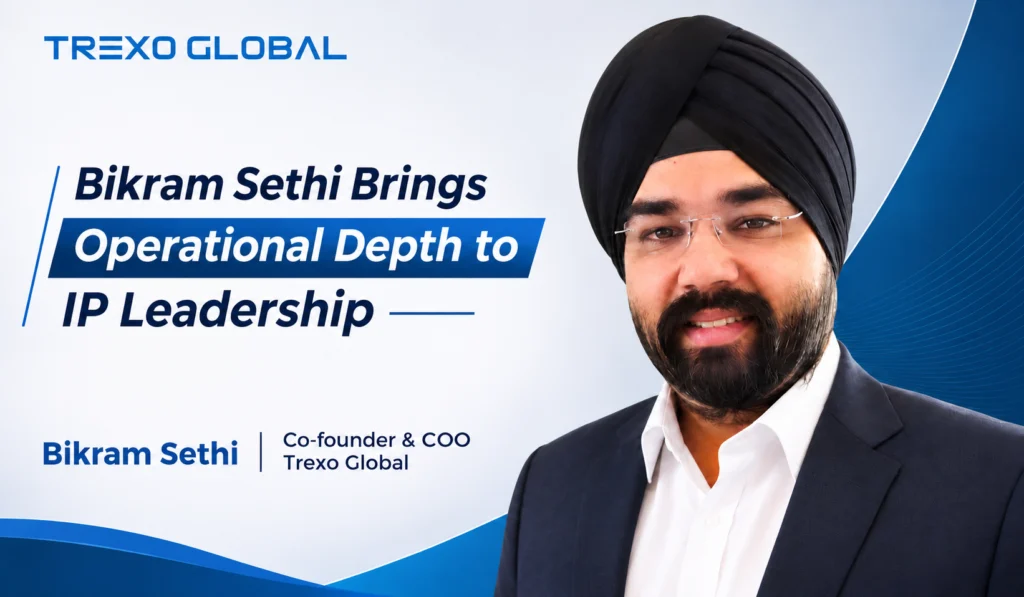
Bikram Sethi , Co-Founder and Chief Operating Officer of Trexo Global , has spent more than 17 years working in
IP. His approach to growth draws on experience of managing large operations and helping clients change how
their teams work.
Experience across delivery and transformation
Sethi’s career includes roles with GE, Thomson Reuters and CPA Global, now Clarivate. He established and ran atrademark renewals operation handling more than 50,000 renewals annually, and set up an IP management
system implementation and consulting practice for South Asia.
He went on to build and manage a global filing and prosecution team of more than 800 professionals serving
over 200 clients. His work has also included advising North American law firms on redesigning IP operations.
These assignments brought together delivery at scale, process design and the practical challenges of
implementing change.
Making knowledge part of the process
A recurring concern for Sethi is dependence on unwritten knowledge. A client’s coding conventions or the
handling of an unusual instruction may be familiar to a senior colleague but difficult for others to follow. As
volumes increase, that reliance can create bottlenecks and inconsistent execution.
Documenting how work should be handled makes that knowledge available to the wider team. Client-specific
procedures give people a common reference while preserving the requirements that make each engagement
different. Clear escalation routes help them recognise when an issue needs experienced review.
Applying those lessons at Trexo
Sethi co-founded Trexo Global in 2022. The company brings together an IP-native modular platform and senior
IP expertise to support corporate IP departments and law firms. Its work spans the IP lifecycle, including filing,
prosecution support, portfolio data and renewals.
The modular approach lets clients address a particular operational need and extend their use of the platform as
requirements evolve. Sethi leads the operations and IP consulting practice, drawing on his experience of both
service delivery and system implementation.
Keeping judgement in the workflow
A Certified Lean Six Sigma Black Belt, Sethi emphasises consistency in repeatable work. Record creation and
deadline handling need documented methods that account for relevant client instructions and jurisdiction-
specific requirements. Exceptions need a clear route to review.
His approach to automation follows the same principle. Technology can reduce repetitive effort, while decisions
requiring interpretation or carrying significant consequences remain subject to appropriate human oversight.
Defining where that oversight belongs helps teams retain accountability as their use of automation grows.
Understanding the cost of rework
Sethi also places emphasis on the effort that can disappear inside apparently completed work. Correcting
entries, chasing incomplete instructions and repeating checks all consume capacity. Teams may meet their
deadlines while still spending substantial time resolving avoidable problems.
Tracking rework alongside turnaround time, quality and cost can make those problems more visible. It gives
leaders a basis for examining where instructions are unclear, information is incomplete or responsibilities need
attention. Addressing the cause can be more useful than adding another layer of checking.
Building the team for continued growth
Trexo has grown to over 300 employees and is serving clients across five continents, including IP law firms,
corporate IP teams, research and innovation organisations, government and public sector bodies, universities
and research institutes. For Sethi, maintaining consistent delivery as the business expands requires continued
investment in specialist skills. Trexo EDGE, the companys learning and development programme for early-career
professionals, is part of that commitment.
His inclusion in the IAM Strategy 300 in 2025 and 2026 adds recognition to a career spanning operations,
consulting and entrepreneurship. The connection between those disciplines is central to his leadership:
experience of delivering IP work informs the processes and capabilities he helps build.
A practical vision for IP operations
Sethi’s future focus is on helping IP teams grow with greater confidence in their operations. That means making work easier to understand and execute, reducing unnecessary reconciliation and keeping expertise available where it matters most.
Trexo’s promise is “Built for IP. Made Simple.” For its COO, delivering on that ambition rests on dependable processes and capable people, supported by technology that gives IP professionals more time to exercise their judgement.