Top 10 FMCG Companies in Dubai 2026
From Nestlé and Unilever to Al Rawabi and Al Ghurair Foods, meet the top 10 FMCG companies in Dubai for 2026, with verified figures, brands and recent news.
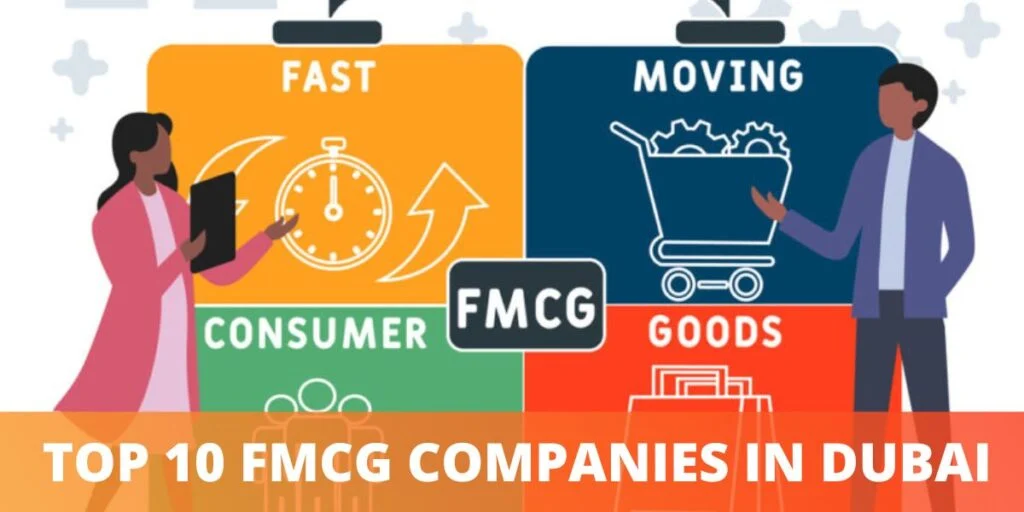
Pick up a basket at any Dubai supermarket. Within one aisle you’ve got coffee from a Swiss company, ghee from India, milk from a farm out in Al Khawaneej and a can of cola bottled in Dubai Investment Park. Nobody thinks twice about it.
But someone had to get it there. A bag of flour or a carton of laban passes through a factory or a port, then a warehouse and a truck, before you see it. Plenty of the firms doing that work are huge multinationals running the region from Dubai. Plenty more began small: one farm, one mill, one shop.
Here’s what surprises people. The home team is ahead. In Worldpanel by Numerator’s Brand Footprint 2026 report, UAE households made 968 million brand choices in a year and spent 3.4% more on FMCG. Of the top 250 brands, local and regional names grabbed 67% of consumer reach points. And for another year running, Al Rawabi topped the list.
Also Read: Top 10 Health Insurance Companies in Dubai 2026
Bigger market, more competition, and shoppers who know exactly what they like. If you plan to sell or source FMCG goods in Dubai, you’ll want to know who’s who.
This guide looks at the top 10 FMCG companies in Dubai for 2026, from multinational manufacturers to the distributors that keep shelves stocked.
Why Dubai Matters to FMCG Companies
Dubai isn’t just a big consumer market. For many FMCG companies in Dubai, the city is the base for an entire region.
A Regional Head Office Address
Nestlé runs its Middle East and North Africa head office from Expo City Dubai. Mondelēz keeps its Middle East, North Africa and Pakistan leadership team in Jebel Ali Free Zone. So Dubai isn’t only a distribution point. It’s where decisions for whole regions get made.
Local Manufacturing at Scale
Some companies make their goods right here. Unilever’s personal care plant in Dubai Industrial Park was built to make about 100,000 tonnes of liquid products a year, and Dubai Refreshment bottles Pepsi drinks at its plant in Dubai Investment Park 2.
Food Security Is a National Priority
The UAE’s National Food Security Strategy 2051 is pushing companies to invest in producing food inside the country. Al Ghurair Foods and Al Seer Group have both tied recent projects to that goal, from new processing plants to logistics hubs.
Shoppers Reward Local Brands
Local brands keep getting more popular with UAE shoppers. Al Rawabi, Almarai and Al Ain Farm led the 2026 Brand Footprint ranking. If you’re selling into the UAE, a strong local partner can make a real difference.
Top 10 FMCG Companies in Dubai at a Glance
| Rank | Name | Core segment | Key 2026 figure |
|---|---|---|---|
| 1 | Nestlé Middle East and North Africa | Food, beverages, nutrition | 25 factories across 19 countries in MENA |
| 2 | Unilever | Personal care, home care, food | Dh1bn Dubai plant, about 100,000 tonnes a year capacity |
| 3 | Agthia Group | Water, food, snacking, protein | AED 4.8bn net revenue in FY2025 |
| 4 | Al Ghurair Foods | Staples, ingredients, eggs | AED 1bn food processing program at KEZAD |
| 5 | Al Rawabi Dairy Company | Dairy and juices | UAE’s most chosen FMCG brand in 2026 |
| 6 | Dubai Refreshment (P.J.S.C.) | Soft drinks and water | AED 877.2m revenue in FY2025 |
| 7 | Mondelēz International | Chocolate, biscuits, snacks | MENAP leadership team based in JAFZA |
| 8 | Al Islami Foods | Halal frozen and chilled foods | Brand repositioned in September 2024 |
| 9 | Al Seer Group | FMCG distribution | Logistics facility agreed with Food Tech Valley |
| 10 | Al Maya Group | FMCG distribution and retail | Over 50 supermarkets in the UAE and Oman |
Top 10 FMCG Companies in Dubai (2026)
Here are the companies shaping what Dubai buys, eats and drinks in 2026.
1. Nestlé Middle East and North Africa
Nestlé Middle East and North Africa is the regional division of the Swiss food group, covering 19 countries from its head office in Expo City Dubai. Nestlé’s history in the region goes back more than 125 years, to the first infant cereals sold in Egypt. Today it runs 25 food and beverage factories and directly employs more than 10,000 people. Its portfolio of over 60 brands includes Nescafé, Nido, Maggi, KitKat and Cerelac.
Nestlé doesn’t just use Dubai as an office. It has two food and beverage factories in the city making confectionery, dairy, culinary products and coffee, and they export to around 30 countries. In July 2026 it opened the SparX Innovation Hub at its new Expo City head office. The hub uses AI and consumer insight to bring new products to market faster.
Key FMCG Strengths
✔ Coffee and creamers – Nescafé and related brands
✔ Infant nutrition and dairy – Cerelac and Nido
✔ Confectionery and culinary – KitKat and Maggi
✔ Local manufacturing – two Dubai factories serving export markets
Best for: Retailers and partners that want a deep, trusted multi-category portfolio.
2. Unilever
Unilever is a household name in Dubai, with brands across personal care, home care and food. Its regional business, Unilever Arabia, hires for marketing and category roles in Dubai, and the company also makes products in the emirate.
In December 2016, Unilever opened a Dh1 billion (about US$272 million) factory in Dubai Industrial Park. The 100,000-square-meter plant was built to make about 100,000 tonnes of liquid beauty and personal care products a year, including Dove, Lifebuoy, Vaseline, Clear, TRESemmé and Sunsilk. About 80% of its output was planned for export to Europe and the Middle East and North Africa.
Key FMCG Strengths
✔ Personal care – Dove, Vaseline and Lifebuoy
✔ Hair care – Clear, TRESemmé and Sunsilk
✔ Made in the UAE – large-scale liquids production in Dubai
✔ Export reach – a plant built mainly to serve outside markets
Best for: Retailers wanting fast replenishment of leading personal care brands.
3. Agthia Group
Agthia Group is a food and beverage company headquartered in Abu Dhabi. It’s listed on the Abu Dhabi Securities Exchange and is part of ADQ. Established in 2004, it now has more than 12,000 employees and assets in seven countries, and it exports to over 60. Its brands include Al Ain Water, Al Bayan, Riviere, Al Foah, Abu Auf and Grand Mills.
Agthia’s preliminary FY2025 net revenue came to AED 4.8 billion, down 1.4% year on year, and underlying EBITDA was AED 606.8 million. Without the one-off wheat trading in 2024 and the Egyptian currency devaluation, revenue would have grown 3.5%. Its Water and Food segment grew sales 14.6% over the year, and Al Ain became the group’s first AED 1 billion brand.
Key FMCG Strengths
✔ Bottled water – Al Ain Water and Al Bayan
✔ Snacking – Al Foah dates and Abu Auf
✔ Protein and frozen – Nabil Foods and Al Ain Frozen Vegetables
✔ Agri-business – Grand Mills flour and Agrivita feed
Best for: Buyers looking for a listed UAE producer with strong local brands.
4. Al Ghurair Foods
Al Ghurair Foods is the food arm of Dubai’s Al Ghurair group. It started in 1976 with the creation of National Flour Mills. Today it trades about 9 million metric tonnes of grain and oilseed a year, distributes to more than 50 countries and employs over 1,500 people. Its consumer brand, Jenan, puts flour and grain staples in many UAE kitchens.
At Gulfood Manufacturing in November 2025, Al Ghurair Foods launched a new Food Ingredients Division to supply bakery, confectionery, beverage and baby food makers. It also outlined an AED 1 billion program of food processing projects at KEZAD in Abu Dhabi, including a corn starch plant, a broiler farm, a liquid eggs facility and a poultry processing plant. Its poultry farm in the Masafi mountains produces about one in every five eggs in the UAE, the company says.
Key FMCG Strengths
✔ Kitchen staples – Jenan flour and grains
✔ Eggs – the Emirates Eggs brand and a Masafi poultry farm
✔ Food ingredients – starches, glucose and maltodextrin (planned)
✔ Grain sourcing – wheat, corn, oats and oilseeds
Best for: Manufacturers and retailers needing reliable staples and ingredients.
5. Al Rawabi Dairy Company
Al Rawabi Dairy Company began in 1989 with 500 cows imported from Germany. Its farm in Al Khawaneej, Dubai, is home to the herd, the business and production. A 2022 company profile put the herd at more than 16,500 cattle, with 350,000 liters of dairy products and 150,000 liters of juice made each day. Dr. Ahmed El Tigani is its founder and CEO.
Shoppers keep coming back. In Worldpanel by Numerator’s Brand Footprint 2026 ranking, Al Rawabi kept its place as the UAE’s most chosen FMCG brand, ahead of Almarai, Al Ain Farm, Marmum and L’Usine. It built that reputation on freshness, with a promise of farm to table in 24 hours.
Key FMCG Strengths
✔ Fresh milk – produced and delivered within 24 hours
✔ Functional dairy – Vitamin D Milk and Super Milk
✔ Yogurt and laban – everyday chilled dairy
✔ Fresh juices – including vitamin-enriched options
Best for: Grocers that need the brand UAE households choose most.
6. Dubai Refreshment (P.J.S.C.)
Dubai Refreshment was founded in 1959 in Deira with one glass bottling line and 20 employees, and it became an official Pepsi franchisee in 1962. Listed on the Dubai Financial Market, it bottles and sells PepsiCo products in Dubai, Sharjah and the other Northern Emirates, and it exports too. In 2016 it moved to a greenfield plant in Dubai Investment Park 2.
Its revenue was AED 877.2 million in FY2025. The plant has five bottling lines that turn out more than 60 million crates a year, according to a 2024 trade interview, which also put the workforce at over 1,000 people. Pepsi and Aquafina make up more than 90% of volume. Tarek Elsakka is chief executive officer.
Key FMCG Strengths
✔ Carbonated drinks – Pepsi, 7UP, Mirinda and Mountain Dew
✔ Water – Aquafina and LIFEWTR
✔ Still drinks – Lipton, Gatorade and Robinsons
✔ Snacks – Edita and Snack Time
Best for: Retail and foodservice outlets in the Northern Emirates needing beverage supply.
7. Mondelēz International
Mondelēz International, the snacking company behind Cadbury and Oreo, runs its regional office from Jebel Ali Free Zone. The Dubai office is home to the leadership team for the Middle East, North Africa and Pakistan. According to the company, it has more than 80 employees there and supports over 1,000 indirect jobs in the local economy.
Its manufacturing hub in Bahrain makes biscuits, powdered beverages and grocery items sold across the Gulf. In a 2025 interview, Ziad Abla, managing director for Gulf and Developing Markets, called the UAE a high-value market where shoppers are spending more on premium treats.
Key FMCG Strengths
✔ Chocolate – Cadbury
✔ Biscuits – Oreo and local flavors such as cardamom and pistachio kunafa
✔ Regional supply – Bahrain manufacturing hub
✔ Consumer insight – its annual State of Snacking report
Best for: Retailers building out chocolate and biscuit ranges.
8. Al Islami Foods
Al Islami Foods is a Dubai-based halal food company founded by Haj Saeed Lootah, and it has been in the halal food business for five decades. Its range covers halal poultry, meat and snacking products, from minced beef to frozen mixed vegetables. Saleh Abdullah Lootah is managing director.
It has made a name for itself beyond the UAE, too. A 2023 ranking by Salaam Gateway and DinarStandard placed it fifth among the top 30 halal products companies based in OIC countries, and first among regional halal food brands. In September 2024 it unveiled a new brand positioning built on love, innovation and the joy of coming together.
Key FMCG Strengths
✔ Halal poultry – frozen and chilled
✔ Halal meat – including minced beef
✔ Snacking and ready products – quick family meals
✔ Frozen vegetables – everyday freezer staples
Best for: Retailers and households wanting a trusted local halal brand.
9. Al Seer Group
Al Seer Group is headquartered in Dubai and is one of the UAE’s leading FMCG distributors. Company profiles date it to 1961 and list offices in Dubai and Muscat. It distributes food and non-food products, beverages, frozen goods and even stationery, and offers warehousing, logistics, market execution and customer support.
At the Future Food Forum in September 2025, Al Seer signed an agreement with Food Tech Valley, Dubai’s government-backed hub for food innovation. The first project is a logistics facility with ambient and cold chain systems, built to streamline food distribution across the UAE and support locally owned brands. Chief Operating Officer Mamoun Gasim said the model could grow beyond the UAE.
Key FMCG Strengths
✔ Brand distribution – food, beverages and non-food
✔ Cold chain – frozen and chilled categories
✔ Market execution – merchandising and in-store support
✔ Warehousing and logistics – new Food Tech Valley facility
Best for: International brands looking for an established UAE distribution partner.
10. Al Maya Group
Al Maya Group is a Dubai-based conglomerate that the late L K Pagarani founded in 1982 with a single supermarket. Today it runs more than 50 supermarkets across the UAE and Oman and over 90 outlets in total, and it partners with more than 100 brands, according to a February 2026 profile of Group Director and Partner Kamal Vachani.
Its distribution arm, Al Maya FMCG Company LLC, moves products across the GCC, with warehouses in the UAE, Oman, Qatar, Kuwait and Bahrain. Many know the group for bringing Indian brands to Gulf shoppers, including Society Tea, Gowardhan ghee, Kohinoor, Aeroplane pickles and Bikano. Running both supermarkets and distribution sets it apart from most FMCG companies in Dubai and gives brands a direct route to the shelf.
Key FMCG Strengths
✔ FMCG distribution – over 100 brand partnerships
✔ Retail – supermarkets in the UAE and Oman
✔ Indian brands – staples, snacks and condiments
✔ GCC warehousing – five-country footprint
Best for: Indian and South Asian brands entering the Gulf.
How to Choose the Right FMCG Partner in Dubai
A good brand list isn’t everything. When comparing FMCG companies in Dubai, look at how a partner actually gets products onto shelves.
Check Licensing and Registration
Any trading partner needs a valid commercial license from Dubai’s Department of Economy and Tourism or a free zone authority. For food, importers and products are registered through Dubai Municipality’s Montaji system, and shipments are declared through its Food Import and Re-export System.
Ask About Labeling and Compliance
Supermarket packs must carry Arabic labeling, and labels need to show dates, country of origin, ingredients and allergens. A good partner will check your artwork before the first shipment, not after it lands.
Look at Cold Chain Capability
Dairy, frozen and chilled products need temperature control from port to shelf. Ask to visit the partner’s warehouses and vehicles, and ask how it tracks temperature.
Match Their Channel Strength
Some distributors are stronger in hypermarkets, others in groceries, foodservice or online. Know where your shoppers buy, and pick a partner that can get you there.
Review Brand Conflicts
Distributors often carry competing brands. Ask how they’ll handle that conflict and how much sales attention your products will get.
Frequently Asked Questions About FMCG Companies in Dubai
Which is the biggest FMCG company in Dubai?
There’s no single answer. Multinationals such as Nestlé and Unilever have large operations in Dubai, while Al Rawabi is the UAE’s most chosen FMCG brand, according to Worldpanel by Numerator’s 2026 ranking.
Are local brands growing in the UAE?
Yes. Local and regional brands took 67% of consumer reach points among the top 250 FMCG brands in the 2026 Brand Footprint report, and Al Rawabi, Almarai and Al Ain Farm held the top three places.
How do foreign brands enter the Dubai market?
Most work through a licensed local distributor such as Al Seer Group or Al Maya Group. Their products have to be registered with Dubai Municipality and labeled in Arabic.
Which FMCG companies in Dubai are publicly listed?
Dubai Refreshment is listed on the Dubai Financial Market, and Agthia is listed on the Abu Dhabi Securities Exchange. Nestlé, Unilever and Mondelēz are listed through their global parent companies.
Conclusion
The top FMCG companies in Dubai range from global corporations with regional head offices to family groups that grew from a farm, a flour mill or a single store. What they share is reach: the factories, warehouses and trucks that put products in front of millions of shoppers every week.
Whether you’re looking to sell or source, the right choice depends on category, channel and scale. Spending is rising and local brands are gaining ground, so the companies on this list will keep shaping what lands in Dubai’s shopping baskets through 2026.
Related Reading:

Chirag Thakur
Editor, Business News · CEO Review Magazine
Chirag Thakur covers business news for CEO Review Magazine, along with markets, technology and industry explainers and the magazine's Top 10 rankings of companies and leaders.