Adani Green Q2 Results: Profit Rises 16% to ₹747 Crore on Khavda Growth
Adani Green Q2 results: net profit rises 16% to ₹747 crore as power supply revenue jumps 45% and operational capacity grows 24% year-on-year to 20.8 GW.
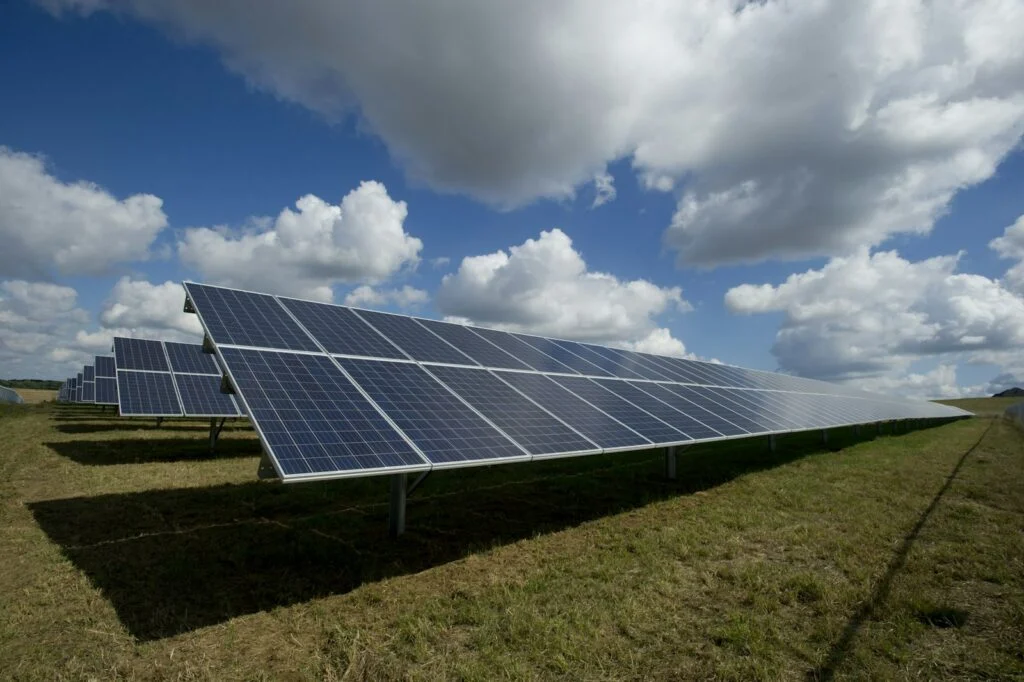
Adani Green Energy reported a 16% rise in consolidated net profit to ₹747 crore for the September quarter, from ₹644 crore a year earlier. The Adani Green Q2 results, announced on October 21, were driven by fresh capacity at its Khavda park in Gujarat.
Total income for the quarter rose 39.1% to ₹4,520 crore from ₹3,249 crore, though it was 3.1% lower than in the June quarter. For the first half of FY27, net profit grew 17.8% to ₹1,730 crore on total income of ₹9,183 crore.
Revenue from power supply, the company’s core business, jumped 45% to ₹4,019 crore. EBITDA from power supply rose 51% to ₹3,835 crore, lifting the reported margin to 92% from 90.5% a year ago, the company said in a media release.
Capacity growth powers Adani Green Q2 results
Operational renewable energy capacity reached 20.8 GW at the end of September, up 24% year-on-year. The company added 4,083 MW of greenfield capacity over the past year, including 2,957 MW of solar, 805 MW of wind and 321 MW of solar-wind hybrid projects.
Most of that came from Khavda, where operational capacity has grown to 10.8 GW from 7.1 GW a year earlier. Adani Green plans to build the park out to 30 GW by 2029. Of the Khavda total, 10,002 MW is the company’s own generation capacity, while 750 MW has been set up for other Adani group companies, the release said.
Energy sales rose 33% to 12,090 million units in the quarter and 32% to 25,747 million units in the first half. Cash profit for the quarter rose 45% to ₹1,951 crore from ₹1,348 crore.
Battery storage and balance sheet
The company commissioned 3,081 MWh of battery energy storage at Khavda during the quarter. That takes its total to 6,632 MWh, which it said accounts for more than half of India’s operational battery storage capacity.
Adani Green said it may beat its FY27 guidance of 10 GWh of battery storage if the current pace of installation holds. Storage is becoming central to renewable developers as discoms and grid operators seek round-the-clock supply rather than daytime solar alone.
The build-out has been capital-heavy. Capital expenditure in the first half rose 38% to about ₹17,160 crore, and consolidated net debt climbed to ₹1,02,973 crore at the end of September from ₹91,252 crore in March.
Net debt stood at 5.6 times run-rate EBITDA, according to the company’s disclosures reported by Angel One. Cash and liquid bank balances were ₹11,875 crore.
Why it matters for India’s energy transition
Adani Green’s expansion is closely tied to India’s target of 500 GW of non-fossil power capacity by 2030. The company is aiming for 50 GW of operational capacity by the same year. The build-out also feeds demand across the power equipment chain, where state-run BHEL recently reported an order book of ₹2.58 lakh crore.
“As India’s largest renewable energy company, we take pride in driving the sector’s momentum,” CEO Ashish Khanna said in the release.
The company also said it held on to top positions in several ESG assessments, including first place in the utility sector in the NSE Sustainability Ratings for a second year in a row.
For investors, the Adani Green Q2 results showed that operating metrics are growing much faster than net profit. Power supply EBITDA rose 51% and cash profit 45%, while reported net profit grew 16%.
For corporate buyers of green power, the growth in storage matters most. Firm, dispatchable renewable supply is what large industrial users need to meet decarbonisation commitments and manage rising power bills.
What happens next
Adani Green shares fell 3.41% to ₹1,251 on the NSE in afternoon trade on October 21, the day the results were announced.
To reach its 2030 goal, the company will need to more than double its current operational capacity in a little over three years. Investors will track execution at Khavda, the commissioning of more storage and any change in leverage as debt-funded capex continues.
For more corporate earnings coverage, see our business news section.

Chirag Thakur
Editor, Business News · CEO Review Magazine
Chirag Thakur covers business news for CEO Review Magazine, along with markets, technology and industry explainers and the magazine's Top 10 rankings of companies and leaders.