Amazon Net Worth 2026: Market Cap, Revenue & Profit
Amazon net worth in 2026: about $2.59T market cap (Oct 30), $551.6B equity, FY2025 revenue of $716.9B, and the Q3 2026 results explained.
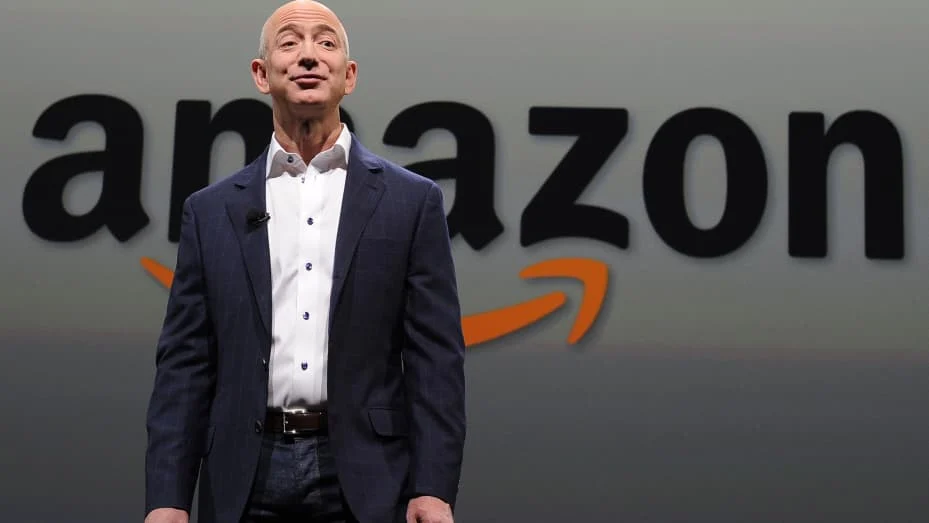
Ask ten people what Amazon is worth and you will probably hear ten different numbers. Some will quote the stock market value. Others will point to the balance sheet, or to the hundreds of billions of dollars the company brings in each year. All of them are partly right. Amazon net worth is not one fixed figure, and in 2026 the gap between those measures is wider than ever.
Amazon.com, Inc. (NASDAQ: AMZN) closed above a $3 trillion market value for the first time on August 3, 2026. By the end of October, after a third-quarter report that missed Wall Street forecasts, its market capitalization had slipped back to roughly $2.6 trillion. Its book value, meanwhile, has climbed past half a trillion dollars, helped by large gains on its stake in AI developer Anthropic.
This guide looks at Amazon’s market cap, shareholders’ equity, revenue and profit using the company’s own filings, its latest quarterly results released on October 29, 2026, and what could move the number from here.
Amazon Net Worth in 2026 at a Glance
| Metric | Figure |
|---|---|
| Market capitalization | About $2.59 trillion (close of October 30, 2026; share price $240.35) |
| Shareholders’ equity (book value) | $551.6 billion (June 30, 2026); $411.1 billion (December 31, 2025) |
| FY2025 revenue (net sales) | $716.9 billion, up 12% |
| FY2025 net income | $77.7 billion ($7.17 per diluted share) |
| Latest quarter revenue (Q3 2026) | $201.9 billion, up 12% (quarter ended September 30, 2026) |
| Latest quarter net income (Q3 2026) | $20.7 billion ($1.89 per diluted share) |
| Employees | About 1,576,000 full-time and part-time (December 31, 2025) |
| CEO | Andy Jassy (since July 2021) |
| Headquarters | Seattle, Washington, USA |
| Founded | 1994, by Jeff Bezos |
| Ticker | NASDAQ: AMZN |
Market capitalization changes every trading day. Figures above are from Amazon’s earnings releases and SEC filings, and from market data as of October 30, 2026.
What Does “Amazon Net Worth” Actually Mean?
For a person, net worth is simple: what you own minus what you owe. For a public company, the phrase gets used in two very different ways, and most articles mix them up.
The first is market capitalization. Multiply the share price by the number of shares outstanding and you get what investors, collectively, are willing to pay for the whole business today. Amazon has about 10.8 billion shares outstanding, so every $10 move in the stock adds or removes more than $100 billion of value. This is the number that makes headlines, and it reflects expectations about future profits as much as anything the company has already earned.
The second is shareholders’ equity, also called book value. This is the accounting version of net worth: total assets minus total liabilities, as reported on the balance sheet. Amazon’s equity stood at $411.1 billion at the end of 2025 and reached $551.6 billion by June 30, 2026, against total assets of about $1.1 trillion.
The gap between the two is the market’s verdict on Amazon’s future. At the end of October 2026, investors valued the company at more than four times its book value. That premium is largely a bet on Amazon Web Services, advertising and the long runway of its newer businesses. When people search for Amazon’s net worth, the market cap is usually the figure they want, but the book value tells you what is actually sitting on the balance sheet.
Amazon Revenue and Profit by Segment (FY2025)
Amazon has three reportable segments: North America, International and AWS. The company’s full-year 2025 results, which were reported on February 5, 2026, illustrate how each area fuels its business.
| Segment | FY2025 net sales | Growth | FY2025 operating income |
|---|---|---|---|
| North America | $426.3 billion | +10% | $29.6 billion |
| International | $161.9 billion | +13% | $4.7 billion |
| AWS | $128.7 billion | +20% | $45.6 billion |
| Total | $716.9 billion | +12% | $80.0 billion |
Retail still accounts for most of the revenue, but AWS powers the profits. North America alone brought in $426.3 billion in 2025. Amazon’s cloud unit accounted for only around 18% of total revenue, but drove $45.6 billion of the company’s $80.0 billion operating income. That’s roughly 57% of operating profit.
Net income increased to $77.7 billion, or $7.17 per diluted share, from $59.2 billion in 2024. Sales for the fourth quarter grew 14% to $213.4 billion. Costs related to Amazon’s big bet on AI also became clear in 2025. Operating cash flow totaled $139.5 billion, but free cash flow dropped to $11.2 billion from $38.2 billion. That was primarily due to increased spending on property and equipment.
Amazon Q3 2026 Results: The Latest Numbers
Amazon released its third-quarter 2026 earnings on October 29, 2026. Net sales increased 12% to $201.9 billion from $180.2 billion a year earlier, or 13% if you exclude currency impacts. The company said that most of Prime Day occurred during the second quarter this year, so revenue growth would have been approximately 400 basis points higher had it not shifted.
Operating income surged to $28.1 billion from $17.4 billion. That translated to an operating margin of 13.9%, which Amazon said was a record for the company. Net income fell to $20.7 billion, or $1.89 per diluted share, from $21.2 billion, or $1.95, a year earlier. That was mostly because the prior-year quarter benefited from $9.5 billion of pre-tax gains on Amazon’s investment in Anthropic.
| Segment (Q3 2026) | Net sales | Growth | Operating income |
|---|---|---|---|
| North America | $112.9 billion | +6% | $8.7 billion (vs $4.8 billion) |
| International | $43.1 billion | +5% (+8% ex-FX) | $1.6 billion (vs $1.2 billion) |
| AWS | $46.0 billion | +39% | $17.8 billion (vs $11.4 billion) |
AWS put up stellar results. Revenue grew 39%, its fastest rate of growth in nearly five years, and the unit now sits at an annualized revenue run rate of $184 billion. CEO Andy Jassy said he expects AWS to grow more than 40% in both 2027 and 2028.
Cash flow was soft. While trailing twelve-month operating cash flow increased 29% to $168.3 billion, free cash flow swung to an outflow of $42.4 billion from an inflow of $14.8 billion a year earlier. Net purchases of property and equipment increased by $94.8 billion, primarily for AI infrastructure. Both revenue and earnings per share fell short of analyst expectations, and Amazon stock dropped 1.41% to close at $240.35 on October 30.
Amazon provided fourth-quarter guidance of $240.0 billion to $247.0 billion in net sales, representing 12% to 16% growth, and $28.5 billion to $33.5 billion in operating income. It kept its 2026 cash capital expenditure plan at about $220 billion.
Amazon Net Worth History: Key Market Cap Milestones
Amazon’s valuation hasn’t marched steadily higher. After briefly topping $1 trillion in intraday trading on September 4, 2018, about a month after Apple did so, it fell roughly in half during 2022 before rebounding. It then reached $2 trillion for the first time on June 26, 2024.
The biggest jump occurred in 2026. Robust second-quarter earnings, with sales up 20% to $200.6 billion, sent the stock surging 4.58% to $284.02 on August 3, 2026, giving Amazon a market value above $3 trillion for the first time. By October 30, Amazon was trading roughly 15% below that close.
| Year-end | Market cap |
|---|---|
| 2018 | $737.46 billion |
| 2019 | $920.22 billion |
| 2020 | $1.634 trillion |
| 2021 | $1.691 trillion |
| 2022 | $856.94 billion |
| 2023 | $1.570 trillion |
| 2024 | $2.352 trillion |
| 2025 | $2.485 trillion |
| October 30, 2026 | About $2.59 trillion |
Year-end values from CompaniesMarketCap.
Book value has climbed more steadily. Amazon’s shareholders’ equity totaled $286.0 billion at the end of 2024, $411.1 billion at the end of 2025 and $551.6 billion at the midpoint of 2026. Much of the 2026 increase came in the second quarter, when Amazon recorded $53.4 billion of pre-tax non-operating income, primarily from its stake in Anthropic, and reported net income of $62.6 billion.
What Drives Amazon’s Value Next
Three themes will decide whether Amazon’s market value climbs back to $3 trillion or goes lower.
AI spending and AWS. Amazon shared in February 2026 that it expected to spend approximately $200 billion on capital expenditures this year. The stock sold off on the news. Amazon later raised that forecast to approximately $220 billion. The idea is that demand for AWS justifies the spending. AWS revenue grew 39% in the third quarter, which suggests the strategy is working, but the negative free cash flow indicates how long investors are being asked to wait.
Cost discipline. Amazon eliminated approximately 14,000 corporate positions in October 2025. Then on January 28, 2026, it announced roughly 16,000 more job cuts. Along with a third-quarter operating margin of 13.9%, the layoffs indicate Amazon is attempting to fund its AI ambitions without allowing retail profitability to suffer.
New businesses. CEO Andy Jassy has highlighted grocery, pharmacy, the Amazon Leo satellite internet business (previously Project Kuiper) and Zoox, Amazon’s robotaxi unit, as long-term growth drivers. In the third-quarter release he said, “There has never been a trillion dollar revenue business, and we may have two of them in the next 5-10 years.” Those are aspirations, not accomplishments, but they do help explain why investors are willing to pay a premium to book value.
Leadership and Ownership
Amazon has been led by president and CEO Andy Jassy since July 2021. Before taking over from founder Jeff Bezos, Jassy ran AWS, which goes some way to explaining Amazon’s emphasis on cloud and AI infrastructure. Bezos, who founded Amazon in 1994 as an online bookstore, is executive chair of the company.
He still owns a significant amount of Amazon stock, but he has been selling shares. Between late June and late July 2026, Bezos sold 25 million shares, valued at close to $5.7 billion. On August 3, 2026, he filed to sell another 15 million shares, worth around $4.07 billion at the time. Both sales are part of a pre-arranged trading plan set up on November 14, 2025.
Amazon.com, Inc. is headquartered in Seattle at 410 Terry Avenue North. The company had about 1,576,000 full-time and part-time employees worldwide as of the end of 2025, according to its annual report.
FAQs
What is Amazon’s net worth in 2026?
By market capitalization, Amazon was worth about $2.59 trillion at the close on October 30, 2026. By book value, its shareholders’ equity was $551.6 billion as of June 30, 2026. The market cap is the figure most people mean, but it changes every trading day.
When did Amazon reach a $3 trillion market cap?
Amazon closed above $3 trillion for the first time on August 3, 2026, when its shares rose 4.58% to $284.02 after strong second-quarter results.
How much revenue does Amazon make?
Amazon reported net sales of $716.9 billion for fiscal 2025, up 12%. In the third quarter of 2026 it reported $201.9 billion, and it expects $240.0 billion to $247.0 billion in the fourth quarter.
Which part of Amazon makes the most money?
AWS. In 2025 the cloud unit generated $128.7 billion in sales but $45.6 billion of Amazon’s $80.0 billion operating income. In the third quarter of 2026, AWS earned $17.8 billion of operating income, more than North America and International combined.
Who owns Amazon?
Amazon is a public company owned by its shareholders, including large institutional investors and founder Jeff Bezos, who still holds a large stake despite selling shares in 2026. Andy Jassy runs the company as CEO.
Conclusion
Amazon’s net worth can be measured in different ways. As of October 30, 2026, Amazon’s market value was roughly $2.59 trillion, about three months after it first reached $3 trillion. It had $551.6 billion of shareholders’ equity on its balance sheet midway through the year, and it reported net income of $77.7 billion on $716.9 billion of revenue in 2025.
The next chapter depends on whether roughly $220 billion of capital spending in 2026 turns into the AWS growth Jassy is promising. For the latest numbers, Amazon’s investor relations site and its SEC filings are the best places to check. You can also compare it with our look at Apple’s net worth, our ranking of the top companies in the world by market capitalization, and the real-time billionaires list, where Jeff Bezos’s fortune is closely tied to Amazon’s share price.

Chirag Thakur
Editor, Business News · CEO Review Magazine
Chirag Thakur covers business news for CEO Review Magazine, along with markets, technology and industry explainers and the magazine's Top 10 rankings of companies and leaders.