Kamala Das: A Literary Icon of Confession, Feminism and Identity
KAMALA DAS: A LITERARY ICON OF CONFESSION, FEMINISM AND IDENTITY Kamala Das, popularly known as Madhavikutty, was one of India’s most influential writers, who revolutionized Indian literature by her confessional poetry and prose in both English and Malayalam.…
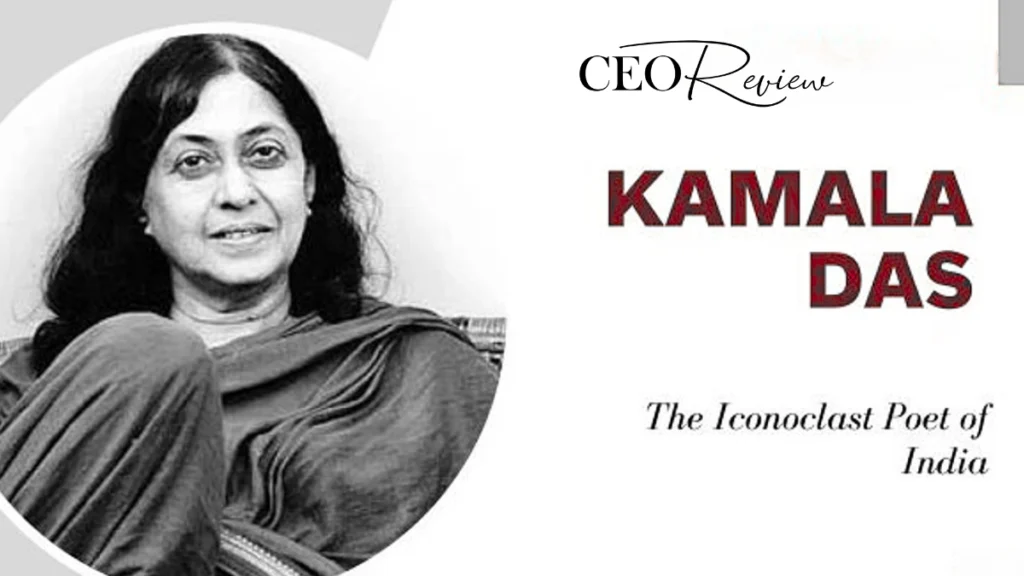
KAMALA DAS: A LITERARY ICON OF CONFESSION, FEMINISM AND IDENTITY
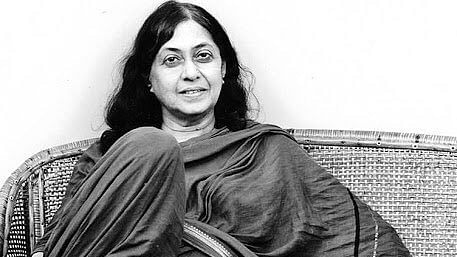
Kamala Das, popularly known as Madhavikutty, was one of India’s most influential writers, who revolutionized Indian literature by her confessional poetry and prose in both English and Malayalam. She was seen as an iconoclastic figure for challenging the established social norms and writing extensively about women’s desires, identity and the struggles of womanhood. A confessional writer, she often used writing as a tool to talk about her personal experiences, often exploring several themes that were seldom discussed by and about women in public. Her writings are often read alongside the works of other famous confessional poets and writers such as Sylvia Plath, Anne Sexton and Robert Lowell. Today, Kamala Das: A Literary Icon of Confession, Feminism and Identity is celebrated as a fearless writer and a literary icon of confession, feminism and identity.
Quick Overview
Full Name | Kamala Das (Madhavikutty, Kamala Surayya) Also Read: Kusha Kapila: The New Age Icon of Indian Entertainment |
Born | 31 March, 1934 |
Died | 31 May, 2009 |
Languages | English, Malayalam |
Genres | Poetry, Autobiography, Short Stories, Essays |
Notable Works | My Story, Summer in Calcutta, The Descendants, The Old Playhouse |
Awards | Kerala Sahitya Akademi Award, Asian Poetry Prize, Sahitya Pravarthaka Award |
Legacy | Pioneer of Confessional Writing and Feminist Discourse in Indian Literature |
Early Life
Kamala Das was born in Punnayarkulam, a village in the Malabar District of Kerala, on 31 March 1934. She was the daughter of V.M. Nair, who was the managing director of one of the leading Malayalam newspapers, titled Mathrubhumi, and Nalapat Balamani Amma, a renowned Malayalam poet. Belonging to a highly intellectual and influential family and raised both in Kerala and Calcutta, Kamala Das was exposed to an environment that comprised the traditional norms of the Southern parts of India along with the cosmopolitan air of colonial Bengal.
When Kamala turned 15, she was married to K. Madhav Das, a bank officer. Her husband played an important role in motivating Kamala to follow her career at a time when women were restricted from carrying on their literary pursuits due to traditional social and gender norms. However, this relation also had several emotional complexities, which Kamala later explored in her work. Despite all the limitations, she established herself as an articulate and fearless self-taught writer, who later became one of the loudest voices talking about the struggles and hardships faced by women.
Literary Career
Kamala Das initiated her journey in English poetry with her famous collection titled Summer in Calcutta (1965). This collection of poems introduced a new way of expression by women that was lyrical yet fierce. Her second poetry collection, The Descendants further explored women’s desires and challenged the patriarchal society. This was followed by other famous works such as The Old Playhouse and Other Poems. She also wrote several short stories and memoirs in Malayalam that portrayed the complexities of middle-class families in Kerala and how they were affected by gender and class divisions in the society.
In 1976, Kamala Das published My Story (Etne Katha), her autobiography, which was a reflection on her search for identity, tensions within her marriage and her experiences with love and intimacy. The work’s frank portrayal of female subjectivity and sexuality established her as a fierce literary voice and invited controversy. Her other poems, such as An Introduction, My Mother at Sixty-Six and A Hot Noon in Malabar, also gained wider appreciation from the reading public and encouraged feminine expression.
Year | Title | Language | Genre |
1965 | Summer In Calcutta | English | Poetry |
1965 | An Introduction | English | Poem (Standalone) |
1967 | The Descendants | English | Poetry |
1967 | Thanuppu | Malayalam | Short Stories |
1973 | The Old Playhouse and Other Poems | English | Poetry |
1976 | Alphabet of Lust | English | Fiction/Satire |
1976 | My story (Etne Katha) | Malayalam/English | Autobiography |
1977 | A Doll for the Child Prostitute | English | Prose |
1978 | Manasi | Malayalam | Essays |
1982 | Madhavikuttiyude Kathakal | Malayalam | Short Stories |
1983 | Manomi | Malayalam | Novel |
1984 | Irupathiyonnam Nottandilekk | Malayalam | Essays |
1987 | Balyakala Smaranakal | Malayalam | Memoir |
1992 | Padmavati the Harlot and Other Stories | English | Short Stories |
1992 | Neermathalam Pootha Kalam | Malayalam | Memoir |
1996 | Only the Soul Knows How to Sing | English | Poetry (Anthology) |
1999 | Ente Pathakal | Malayalam | Essays |
1999 | My Mother at Sixty-Six | English | Poem (Standalone) |
2000 | Madhavikkuttiyude Pranaya Novelukal | Malayalam | Novels (Collection) |
2001 | Snehathinte Swargavathilukal | Malayalam | Memoirs/Essays |
2001 | Yaa Allah | English | Poetry |
Awards and Recognition
Kamala Das received widespread recognition for her works both in India and abroad. She was awarded the Kerala Sahitya Akademi Award in 1968 for Thanuppu, her Malayalam short story collection. She was also honored with the PEN Asian Poetry Prize in the year 1963, bringing her international recognition. Kamala Das was honoured in 1985 with the Sahitya Akademi Award in English for her poetry collection Collected Poems.
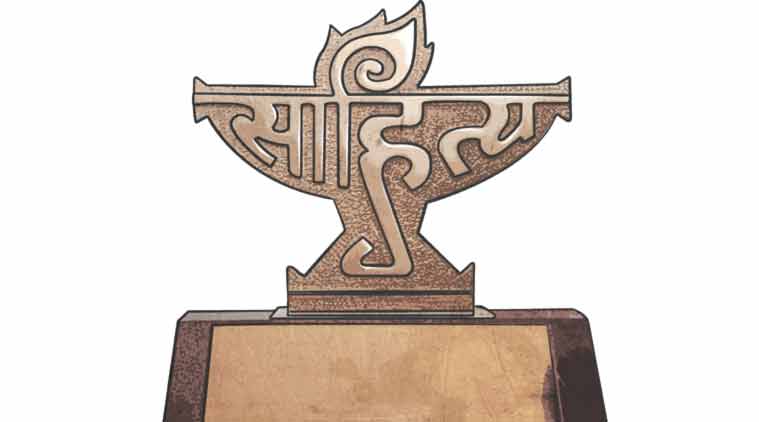
In 1997, Kamala Das received the Vayalar Award for her acclaimed Malayalam work, Neermathalam Pootha Kalam. The following year, she was honored with the Asian Poetry Prize, further establishing her stature as one of the foremost poetic voices in Asia. She was awarded Kerala’s highest literary honor, the Ezhuthachan Award, in 2002 and the Muttathu Varkey Award in 2006, acknowledging her contribution to Malayalam literature.
Last Years
In the final years of her life, Kamala Das made a very personal and spiritual decision to convert to Islam. In 1999, she changed her name to Kamala Surayya. Many people understood her decision as another rebellious attempt to break away from the traditional norms of the society. However, Kamala described it as a spiritual calling and a quest for peace. Kamala Das succumbed to a long illness and passed away in Pune, Maharashtra, on 31st May 2009.
Also read: Anna Mani- The Indian Physicist
Kamala Das, later Kamala Surayya, played a pivotal role in shaping Indian literature and making room for feminine expression by fearlessly exploring women’s struggles, desires, identity and quest for love. Her confessional poetry often challenged the norms of the society by exploring the ideas of gender and class in an unfiltered manner. Kamala Das was a pioneering figure and a literary icon of confession, feminism and identity.
Related Reading:

Khushboo Singh
Senior Editor, Interviews & Profiles · CEO Review Magazine
Khushboo Singh is a business journalist at CEO Review Magazine, covering leadership strategy, corporate governance, and executive decision-making. With 5 Years of experience writing on C-suite priorities and organizational transformation, Khushboo's work focuses on translating complex business strategy into actionable insights for founders and executives. Expertise: Leadership, Corporate Strategy, Organizational Change