Ather Energy Q2 Results: EV Maker Turns Profitable, Revenue Up 63%
Ather Energy Q2 results: the EV maker posted a ₹1.26 crore profit against a ₹154 crore loss a year ago as revenue jumped 63% to ₹1,464 crore.
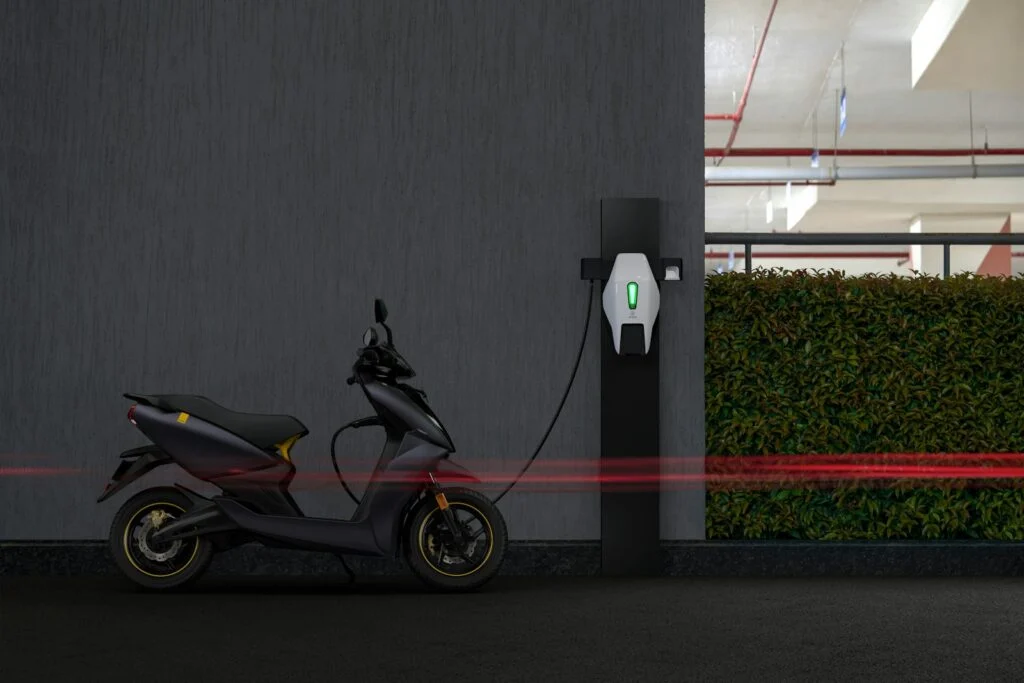
Ather Energy reported its first quarterly net profit since listing, posting ₹1.26 crore for July–September against a ₹154.07 crore loss a year earlier. The company announced its Ather Energy Q2 results in an exchange filing on October 26.
Revenue from operations jumped 62.9% to ₹1,464.24 crore from ₹898.88 crore, while total income rose 62.3% to ₹1,526.95 crore. The electric two-wheeler maker had posted a net loss of about ₹51 crore in the April–June quarter.
Ather Energy Q2 results: volumes and margins
Electric scooter sales rose 42% year on year to 93,211 units during the quarter. Revenue from software, charging, accessories and servicing rose to 15% of total revenue, from 12% a year earlier.
Including other income, EBITDA came in at ₹74.2 crore, a margin of 4.9% compared with minus 9.6% a year ago. Excluding other income, EBITDA was about ₹11.3 crore, a margin of under 1%.
The adjusted gross margin improved 160 basis points to 24%, which the company attributed to pricing, product mix and cost measures. Higher prices of aluminium, copper and plastics weighed on gross margins during the quarter.
For the first half of FY27, Ather’s net loss narrowed to ₹49.83 crore from ₹332.30 crore. Revenue from operations for the six-month period rose to ₹2,681.16 crore from ₹1,543.46 crore.
Demand runs ahead of supply
Co-founder and Chief Executive Officer Tarun Mehta said demand had “more than doubled year-on-year this quarter”. Customer enquiries rose 109% to about 10 lakh, and pre-orders more than doubled to 1.80 lakh, according to the company.
The Hosur factory in Tamil Nadu ran at 98% capacity utilisation during peak production, and supply rather than demand is now the main constraint. Mehta said the company was “not yet out of the woods” and would put capacity and volumes ahead of profit.
The company estimates it missed about 20,000 units of sales a month because of supply limits, according to Inc42. The Hosur plant has an installed capacity of 35,000 units a month, with 6,000 more planned in the third quarter of FY27.
Part of the recent margin gain came from short-term levers such as tighter model management and lower incentives, the company indicated. These may be reversed if supply constraints or commodity costs ease.
Ather’s board approved capital expenditure of about ₹122 crore, including taxes, to expand capacity. Annual capacity at Hosur will rise from 4.2 lakh to 4.95 lakh units, which the company expects to reach by December 2026.
Its new plant at AURIC in Chhatrapati Sambhajinagar, Maharashtra, will have its capacity raised from 5 lakh to 6.5 lakh units a year. Total installed capacity is set to reach about 11.4 lakh units a year by the second quarter of FY28.
Why the turnaround matters
Founded in 2013 by Tarun Mehta and Swapnil Jain, Bengaluru-based Ather listed on the BSE and NSE in May 2025. Hero MotoCorp is among its major shareholders, and the company sells its Rizta and 450 series scooters across India.
Ather’s shares rose as much as 18.78% to ₹1,643.85 on the BSE on October 26 after the results, before closing 13.74% higher at ₹1,574. The rally came as investors weigh whether listed EV makers can turn profitable.
The profit is small, but it marks a shift for a company that has reported losses for years. Listed rival Ola Electric has yet to report a profit, which sets Ather apart among India’s listed electric scooter makers.
For auto executives and investors, the quarter shows that pricing power and software income can narrow losses in electric two-wheelers. It also shows how exposed margins remain to rising metal prices and to supply limits at a single operating plant.
The next test after the Ather Energy Q2 results is whether Ather Energy profit holds as the Maharashtra plant ramps up and fixed costs rise. Investors will track monthly electric scooter sales, commodity prices and the timing of new capacity over the coming quarters.

Chirag Thakur
Editor, Business News · CEO Review Magazine
Chirag Thakur covers business news for CEO Review Magazine, along with markets, technology and industry explainers and the magazine's Top 10 rankings of companies and leaders.